How to Taste Tequila Like a Pro A Step-by-Step Guide
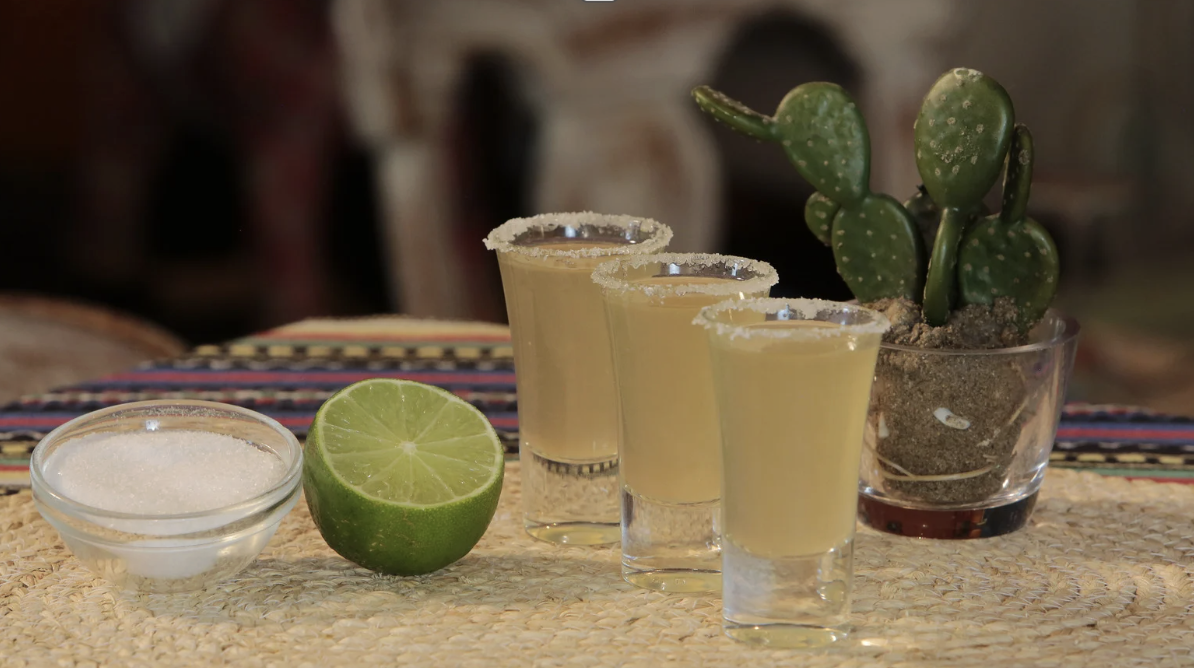
How to Taste Tequila Like a Pro
Tequila isn’t just a shot — it’s an experience. Behind every bottle is a story of craftsmanship, patience, and agave grown under the Mexican sun. Yet too often, its true character gets lost behind salt, lime, and late-night bravado.
When you take a more mindful approach to tasting, tequila opens up like a conversation — layered, expressive, and full of personality. Sensory evaluation isn’t about snobbery; it’s about slowing down long enough to notice what’s really in your glass.
A structured tasting lets you separate marketing hype from genuine artistry. You’ll learn to recognize the silky weight of a well-aged añejo, the peppery sparkle of a crisp blanco, and the soft vanilla whisper of oak that only comes with time.
And yes — you can still enjoy it at your favorite watering hole. At places like Black Vulture Saloon, where the tequila shelf is stocked with carefully chosen bottles, knowing how to taste turns a casual pour into a full-on sensory adventure.
By the end of this guide, you’ll not only know how to taste tequila like a pro — you’ll understand why it matters. So grab a glass (not a shot glass), settle in, and let’s explore how to turn every sip into a story worth remembering.
If you’re curious about where great tequila begins, check out our earlier post From Agave to Bottle: How Tequila Is Made Step by Step — it’s the perfect prequel to this tasting journey.
Choosing the Right Glassware
Before you even take a sip, your tequila’s story begins in the glass. The shape you choose can completely change what you smell, taste, and even feel in that first sip — it’s not just aesthetics, it’s chemistry.
Most people pour tequila into whatever’s clean — maybe a rocks glass or, let’s be honest, a shot glass left over from last night. But when you start tasting tequila for what it is instead of how fast it gets you to the dance floor, the glass suddenly matters.
A Riedel tequila glass or tulip-shaped stemware focuses aromas where they belong — at your nose, not drifting into the air. A Glencairn (yes, the one whiskey drinkers swear by) does the same with its narrow rim, bringing out roasted agave and warm vanilla instead of just alcohol heat. Even a standard wine glass can open up the tequila beautifully, allowing oxygen to soften its edges and reveal more depth.
Compare that to a shot glass — the ultimate party equalizer — where delicate aromas vanish faster than you can say “training wheels.”
“Glassware doesn’t just hold your tequila — it frames it,” says María Barragán, Master Distiller at Tequila Cascahuín. “The right shape can highlight sweetness, mute harshness, or completely change your perception of age and texture.”
Here’s a quick guide to how glass shape impacts your tasting experience:
| Glass Type | Best For | Aroma Impact | Flavor Effect |
|---|---|---|---|
| Riedel Tequila Glass | Premium blancos & reposados | Concentrates complex aromas | Enhances balance and clarity |
| Tulip-Shaped Glass | Reposado & añejo | Opens subtle spice and fruit notes | Smooths harsh edges, enhances warmth |
| Glencairn Glass | Añejo & extra añejo | Deep, layered aromatics | Intensifies mouthfeel and oak character |
| Wine Glass | Any high-quality tequila | Broadens aromatics, adds airiness | Softens perception of alcohol heat |
| Shot Glass | Party tequila (you know the one) | Minimal aroma capture | Harsh, fast, and gone before it begins |
Preparing for a Tequila Tasting
Before the tequila ever hits your lips, the setup matters more than most people realize. Great tequila is expressive — but only if you give it the space to speak.
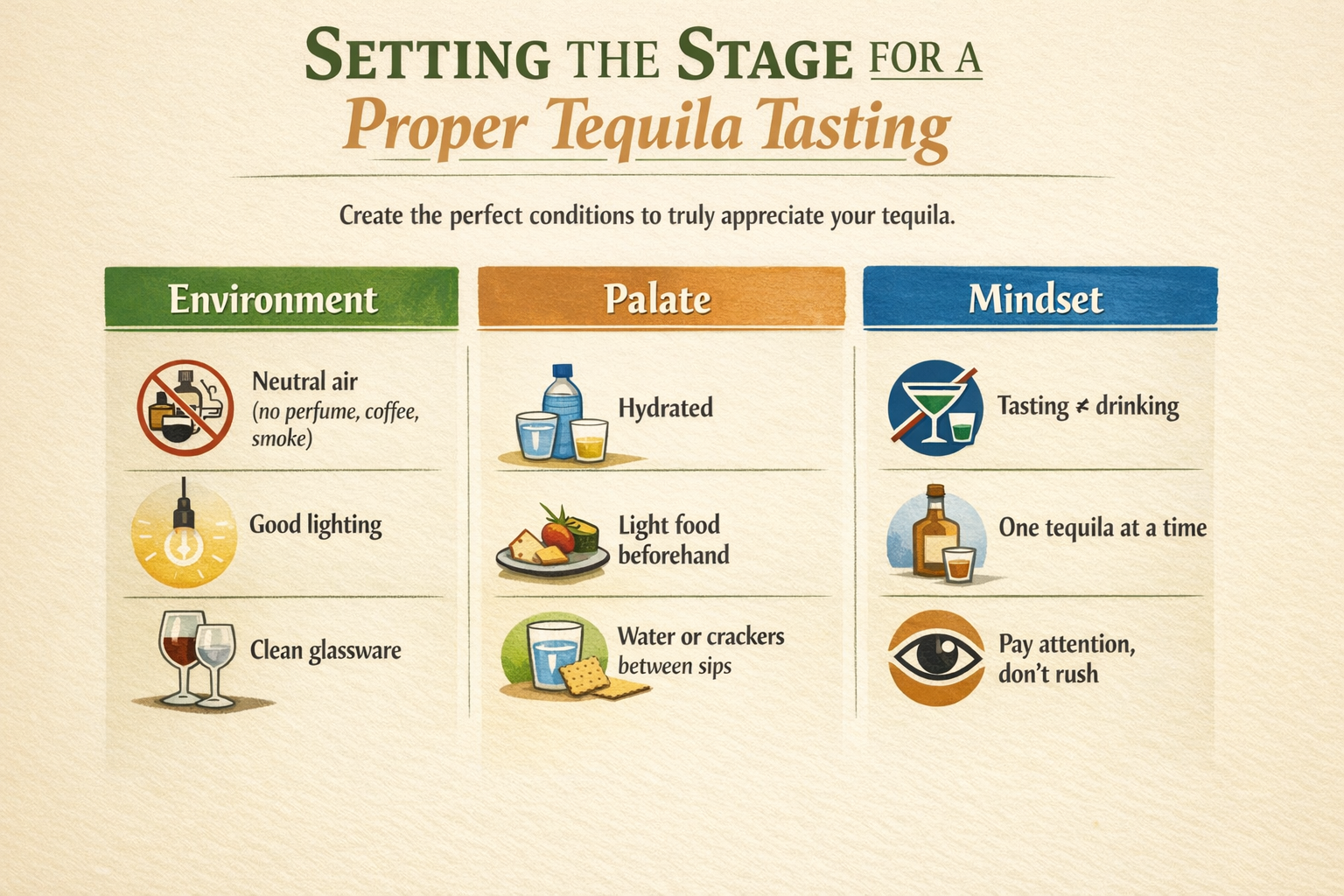
Start with your environment. Strong smells like perfume, candles, cleaning products, or even fresh coffee can hijack your senses before you lift the glass. Good lighting matters too. Seeing the color and clarity is part of the experience, not an afterthought. This isn’t about creating a sterile lab — it’s about clearing the noise so the tequila gets a fair shot.
Palate prep comes next. Hydrate beforehand and keep things simple. Heavy, spicy, or salty foods bulldoze subtle flavors, especially in blancos and reposados. Between pours, water or a plain cracker resets your palate so each tequila gets its own moment.
“If your senses are distracted, the tequila never gets a chance to show you who it really is.” — Tequila Master Distiller insight
Finally — set your intention. There’s a difference between tasting tequila and drinking tequila. One is about curiosity and attention. The other is about the vibe of the night. Both are valid, but knowing which mode you’re in changes everything.
Slow down, focus, and tequila stops being background noise — it starts telling a story. And the good bottles? They have a lot to say.
Visual Assessment: What Tequila Reveals Before You Sip
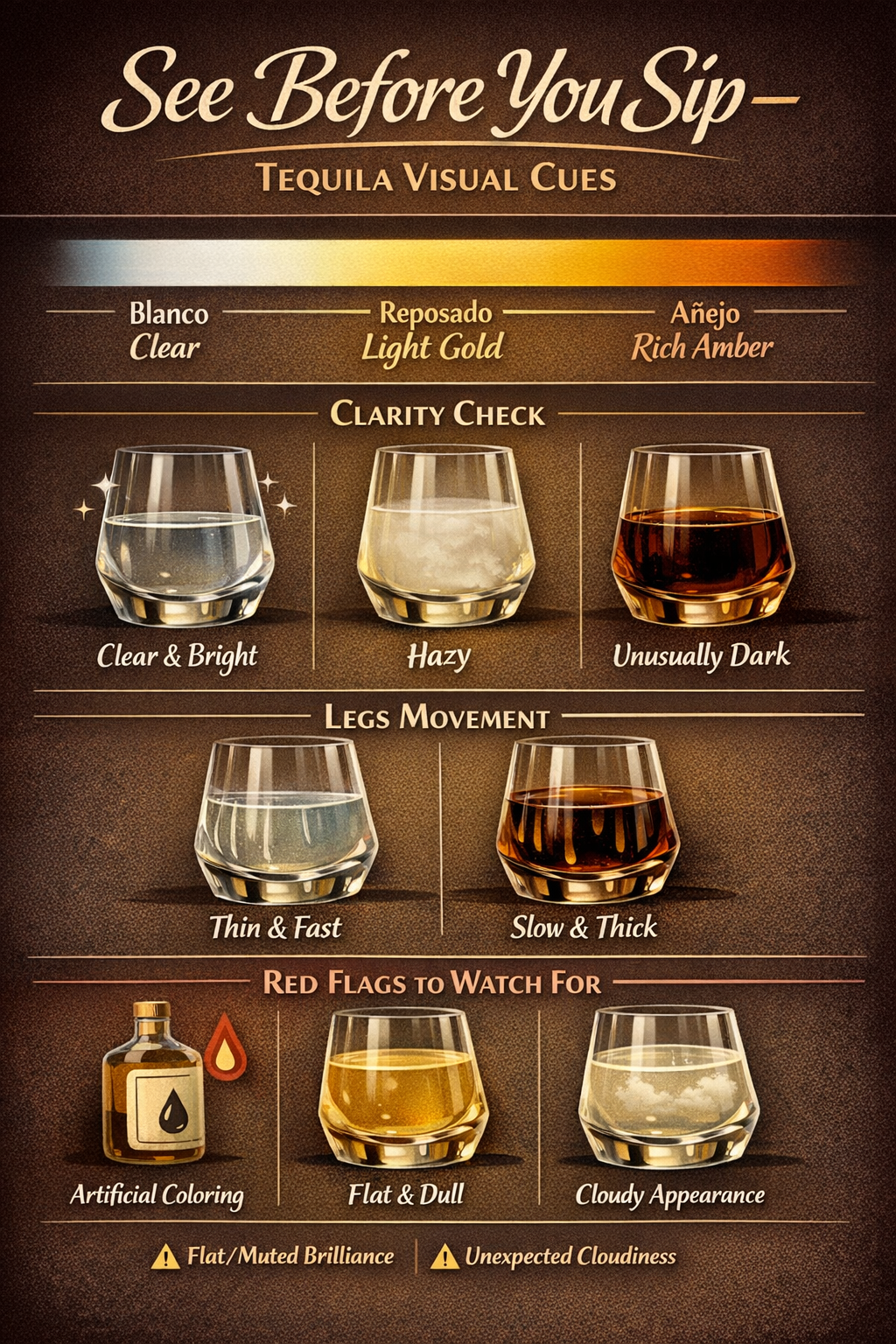
When that pour first catches the light, your tequila starts whispering its story. Color, clarity, and movement aren’t guesses — they’re clues.
A young blanco should be clear as desert air. If it’s tinted gold, pause — sometimes color comes from actual barrel aging, and sometimes it comes from additives that have nothing to do with quality. For reposados and añejos, warm amber tones and gentle golden hues are gifts from the oak. Those are the kinds of colors that make you want to slow down and breathe deeper. Black Vulture Saloon
In the glass, brilliance matters. A clean, clear tequila reflects its distiller’s care; haze and murkiness can be honest quirks from traditional production, but they can also be signs of shortcuts or unstable filtration.
Then there are the subtle streams that form when you give the glass a gentle swirl. These “legs” don’t tell you proof — they hint at body and texture, teasing whether this sip will feel silky, weighty, or lean across your tongue.
“Visual cues are your first conversation with the spirit,” says tequila expert Cristina Carrillo. “Before you smell it or taste it, tequila has already begun to speak through its color and clarity.”
For those who want a touch of authority, sites like the Consejo Regulador del Tequila (CRT) lay out how authentic tequilas should look for each style — a good reference if you’re comparing bottles or learning what the rules say about aging and classification. (You can find their standards on color and labeling on the CRT site.)
Aroma Assessment : Nosing Tequila Properly
If visual assessment is tequila’s first whisper, aroma is its first real sentence. Before you taste anything at all, your nose is already parsing the story — citrus brightness, herbal depth, soft wood spice, smoky warmth. Getting this right is where a casual sip becomes a memory.
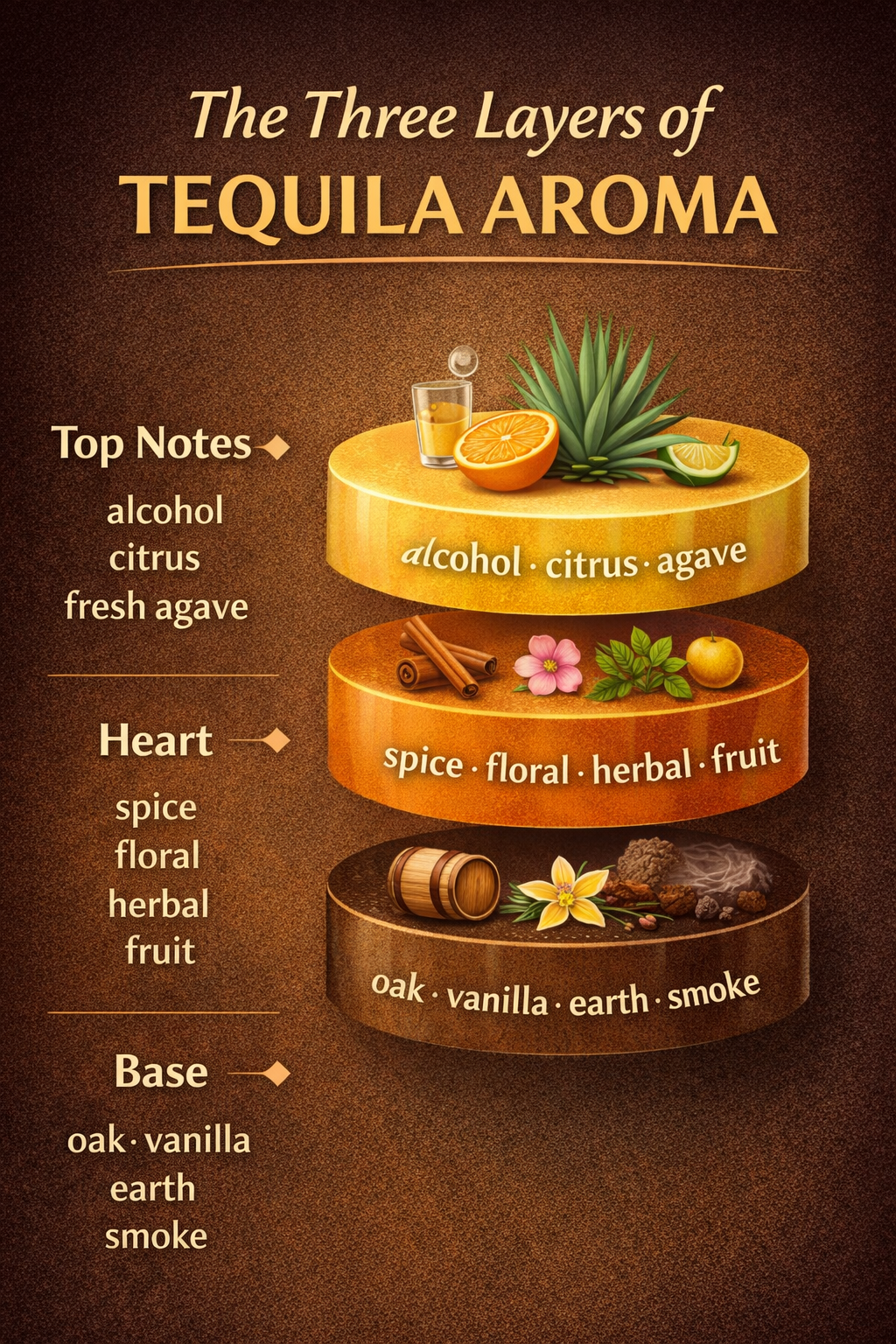
Here’s the key: don’t dive. Bring the glass up slowly, nose just above the rim, and take two gentle sniffs with your mouth slightly open. Think of it like listening to music — you don’t blast the speakers on the first beat. Tequila has layers, and each one deserves to be heard. The Tasting Alliance
The first impression — the top notes — often hits you with alcohol spiciness, a quick flash of fresh agave, or citrus zest. This is tequila’s greeting. Let it settle.
Deeper, you’ll find the heart of the spirit: spicy whispers, floral or herbal complexity, ripe fruit hints that pull you into the tequila’s character. This is where craftsmanship starts to distinguish itself from generic spirit. The Tasting Alliance
Finally, gently lower your nose to find the base: the oak from a reposado’s barrels, a soft vanilla caress in an añejo, or earthy smoke in expressions with more time in wood. These base aromas are the slow reveals — the story elements that arrive once the spirit has opened up and shows you its depth. Academia Patrón
“Aroma isn’t just about catching scents — it’s about understanding what those scents say about how the tequila was made, when it was aged, and how it was handled,” says industry sommelier and spirits educator Julian Estrada. “A well-trained nose can spot subtle production choices before the first sip ever touches the tongue.”
If you want a visual guide to different tequila aromas, try an official tequila tasting wheel — a tool used by pros worldwide to organize smell into recognizable categories. You can explore what tequila experts use in tasting seminars here: Academia Patrón’s Tequila Tasting Wheel (a great reference for discovering which aroma notes most spirits reveal). Academia Patrón
This is where tequila pulling you in becomes tequila holding you there — when the sugar, the oak, the spice, the earth all take turns speaking to your senses. And if you thought tequila was just “smooth,” try nosing it right; it’ll surprise you.
Tasting Tequila: Flavor, Texture and Finish
This is where tequila reveals itself — and where rushing ruins the experience. Proper tasting isn’t about endurance or bravado; it’s about patience and attention.
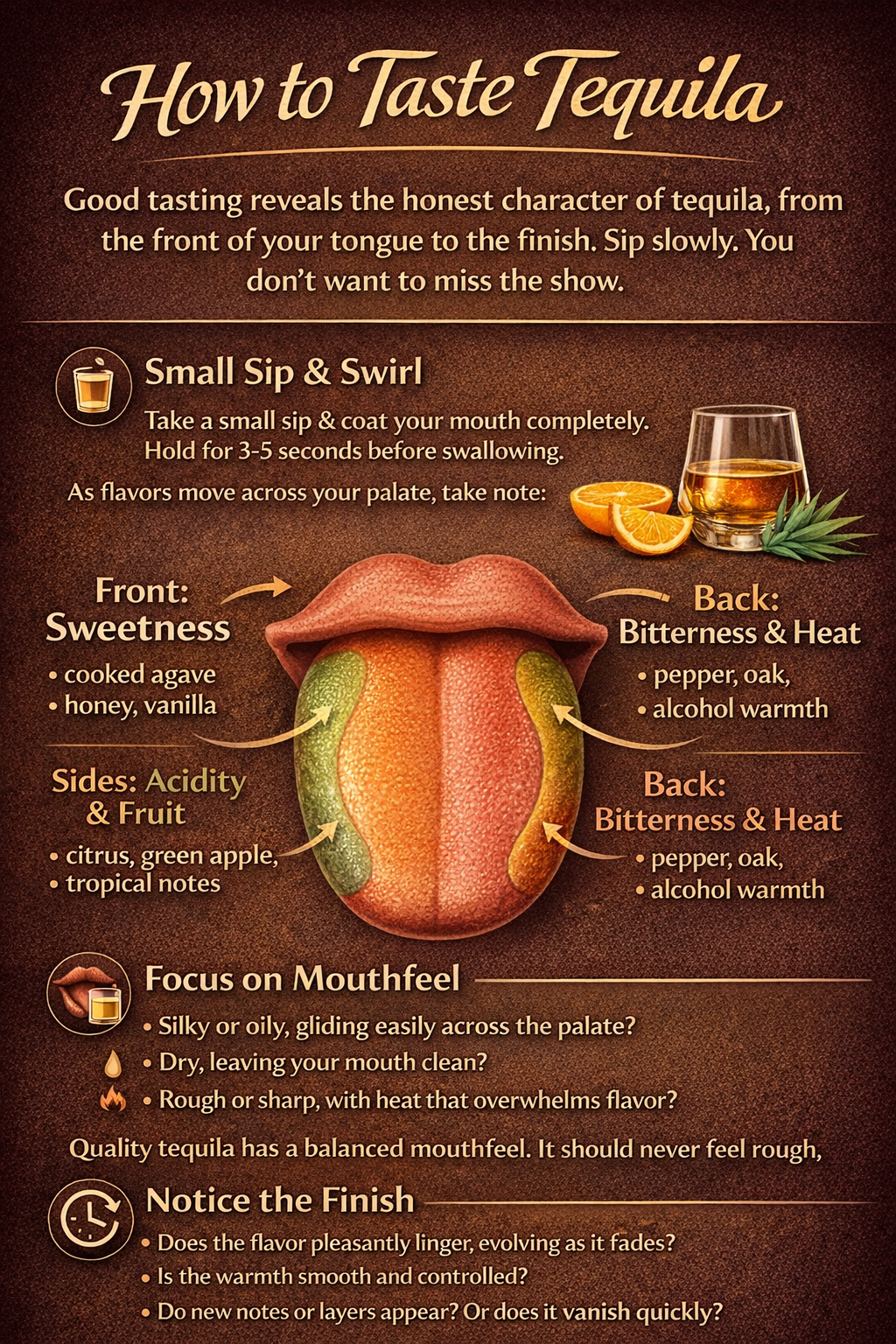
Begin with a small sip, just enough to coat the mouth. Hold it for three to five seconds before swallowing. During this brief pause, the tequila warms and expands, allowing different flavor compounds to emerge gradually rather than all at once.
As the spirit moves across your palate, notice how flavors register in different zones. Sweetness often appears first at the front of the tongue, driven by cooked agave, caramel, or vanilla. Along the sides, acidity and fruit notes surface — citrus, stone fruit, or subtle tropical tones. At the back, bitterness and heat become apparent, often revealing pepper, spice, or oak influence. A well-made tequila delivers warmth without aggression.
Mouthfeel is just as important as flavor. Pay attention to texture: does the tequila feel silky and rounded, oily and weighty, or thin and rough? High-quality tequila tends to feel integrated and smooth, while poorly made spirits often feel sharp, drying, or unbalanced.
“Texture tells you as much about a tequila as aroma or flavor,” explains spirits educator Clay Thompson. “It reflects fermentation quality, distillation cuts, and how carefully the tequila was handled before bottling.”
Finish is the final measure of quality. A good tequila doesn’t disappear immediately — it lingers and evolves, often revealing new notes after the swallow. Look for a finish that feels warm and balanced rather than hot or bitter. The best tequilas leave you curious, not fatigued.
Mastering this step trains your palate to recognize quality instinctively — no label, no price tag required.
Identifying Common Tequila Flaws
Not every tequila deserves the benefit of the doubt. Once you know what to look for, the red flags become obvious — and hard to ignore.
Start with the burn. A little warmth is expected, but harsh, throat-scorching heat that overwhelms flavor usually points to rushed fermentation, poor distillation cuts, or overly aggressive alcohol levels. Quality tequila should feel warm, not punishing.
Next, trust your nose and palate if something feels off:
Chemical or solvent-like aromas can signal low-quality distillation or additives
Cloying sweetness often suggests artificial flavoring or sweeteners masking flaws
Unpleasant bitterness at the finish may come from poor cuts or over-extracted compounds
Cloudiness or unnatural color can indicate additives or shortcuts in production
As tequila author and educator David T. Smith puts it:
“Good tequila should taste of agave first. When sweetness, burn, or oak dominates, it’s often covering up something that didn’t go right.”
Color can also be revealing. While aging naturally deepens hue, overly dark or overly uniform color may point to caramel coloring rather than time in the barrel. Similarly, flavored tequilas often smell louder than they taste — a dead giveaway once you slow down.
One of the most effective ways to spot flaws? Blind tasting.
Remove the label, the bottle shape, the reputation. Taste two or three tequilas side by side without knowing what’s what. Patterns emerge fast. Artificial sweetness stands out. Harsh alcohol has nowhere to hide. And more often than not, personal preference shifts away from hype and toward balance.
Blind tasting doesn’t make you picky — it makes you honest. And once you’ve trained your palate this way, it’s almost impossible to unlearn.
Advanced Tequila Tasting Techniques
Once you’ve nailed the basics, tasting tequila becomes less about what you notice and more about how deeply you notice it. These techniques help pull out details that don’t always show up on the first sip.
The Hand Test
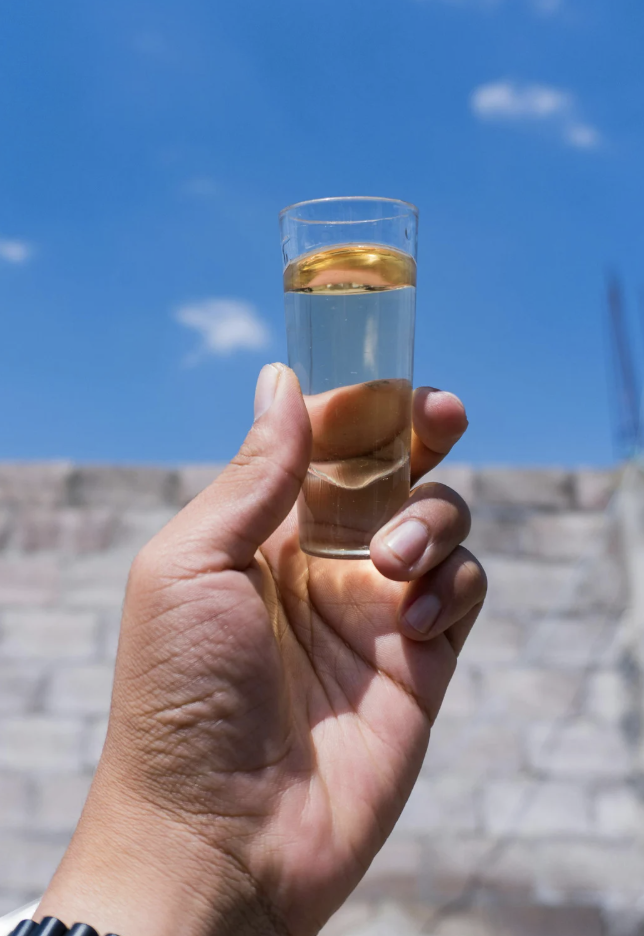
This one’s simple — and surprisingly effective. Pour a small amount of tequila into your glass and gently cup it in your palm for 20–30 seconds. The warmth opens up volatile aromatics that can stay muted at cooler temperatures. Bring the glass back to your nose and take a slow sniff. You’ll often pick up deeper agave notes, spice, or subtle sweetness that wasn’t there before.
Comparative Tastings
Tasting in isolation tells you something. Tasting side by side tells you everything.
Horizontal tasting: Same tequila style (blanco, reposado, añejo), different brands
Great for spotting production differences and house styles.Vertical tasting: Same brand, different expressions or ages
Perfect for understanding how aging changes flavor, texture, and balance.
Patterns emerge quickly — and once you see them, you can’t unsee them.
Flavor Memory Training
Using tasting charts or flavor wheels helps sharpen recognition over time. You don’t need to name every note perfectly — the goal is consistency. Writing down impressions, even loosely, builds flavor memory and confidence. Over time, “that tastes good” turns into “that tastes intentional.”
This isn’t about turning tasting into homework. It’s about giving your senses a framework so they can work better.
Tasting Tequila in a Bar Setting
Most tequila isn’t tasted in a quiet room with perfect lighting and a notebook. It’s tasted out in the wild — at a bar, mid-conversation, maybe with music playing and friends talking over each other. And that’s fine. You can still taste thoughtfully without turning it into a performance.
Start by ordering intentionally. If flights are available, they’re your best friend — especially when they’re grouped by style or brand. If not, stick to one tequila at a time and give it a moment before moving on. No rush, no pressure.
When the glass hits the bar, ignore the noise for about thirty seconds. Take a quick look at the color. Lift the glass for a short nosing pass. One sip. Let it move across your palate. That’s it. You don’t need to announce anything, write anything down, or impress anyone.
If you’re curious, ask smart, simple questions:
“Is this additive-free?”
“Is this made with traditional ovens or autoclaves?”
“What do people usually notice first with this one?”
Good bartenders appreciate curiosity more than theatrics.
And if all you take away is that one tequila feels smoother, brighter, or more balanced than another — that’s a win. Tasting isn’t about finding the “right” answer. It’s about noticing differences and trusting what you like.
The best part? Once you start tasting this way, it becomes second nature. No salt. No lime. No training wheels. Just tequila, as it’s meant to be experienced.
Conclusion: Why Learning to Taste Tequila Matters
Tasting tequila with intention changes the experience in a real, tangible way. What once felt like a quick pour becomes something layered — shaped by agave, time, and the choices made long before the bottle ever reached the shelf.
A structured approach doesn’t take the fun out of tequila; it adds clarity. You start to recognize balance over burn, texture over heat, and craftsmanship over marketing. Blanco becomes more than “clear,” añejo more than “smooth.” Each expression starts telling its own story.
Most importantly, there’s no finish line here. Your palate evolves. Preferences shift. What matters isn’t memorizing flavor notes — it’s trusting what you taste and giving yourself permission to slow down and notice it.
That mindset carries anywhere tequila is poured. Whether you’re exploring a new bottle at home or choosing something off a well-curated shelf at Black Vulture Saloon, knowing how to taste turns every glass into a more deliberate, more rewarding experience.
So skip the salt. Leave the lime behind. Take a moment with the glass in front of you. Tequila has always had more to say — now you know how to listen. 🥃
Frequently Asked Questions About Tasting Tequila
-
Quality tequila is meant to be sipped, not slammed. Sipping allows the flavors of cooked agave, spice, citrus, and oak to unfold gradually across the palate. Shooting tequila hides both its strengths and its flaws — which is exactly why it became popular in the first place.
-
Not necessarily. Price can reflect aging, production methods, or branding — but it doesn’t guarantee quality. Some mid-priced, well-made tequilas outperform flashy, expensive bottles, especially those loaded with additives. Blind tasting is often the fastest way to separate genuine craftsmanship from hype.
-
Additive-heavy tequilas often show intense sweetness, artificial vanilla or candy aromas, and an unnaturally smooth mouthfeel that feels more engineered than earned. Visually, overly dark or uniform color can also be a clue. When in doubt, look for transparency from the producer and trust what your palate is telling you.
